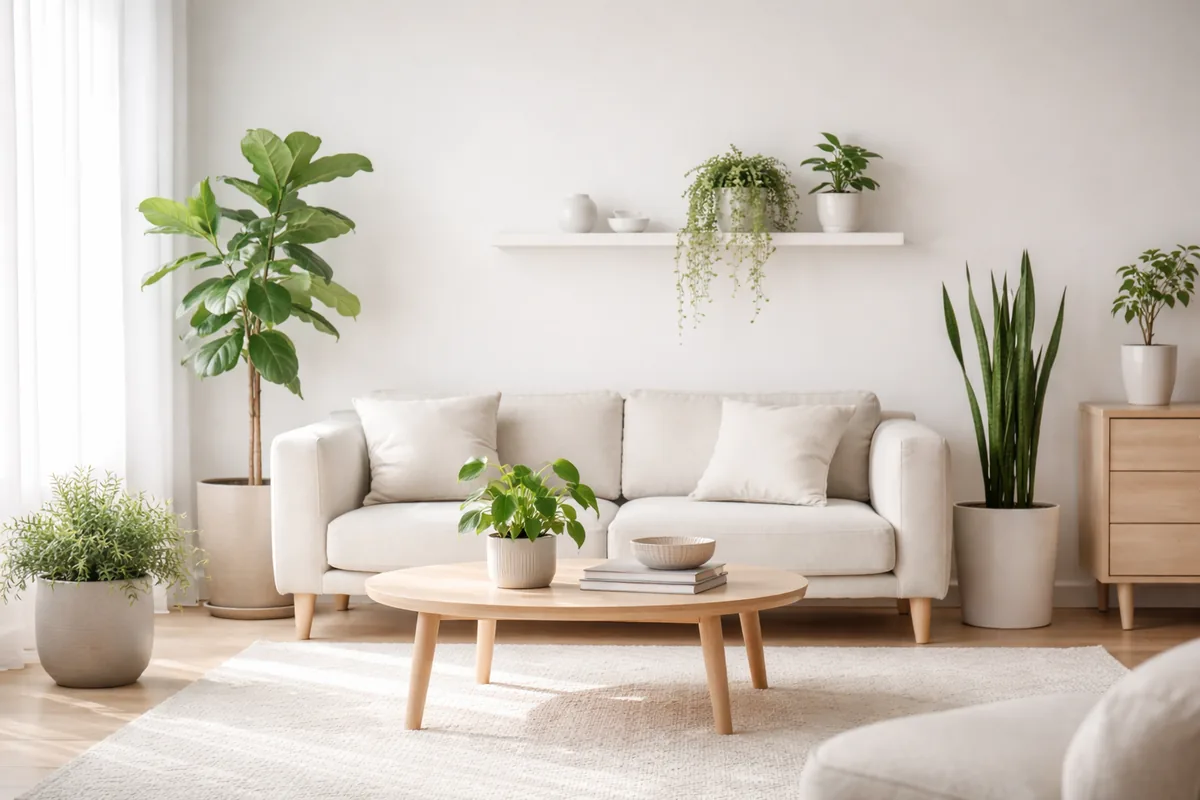
In a minimalist space, including 2 to 5 plants can strike the perfect balance between aesthetics and simplicity. The right number of plants enhances the ambiance without overwhelming the design.
Why choose plants in a minimalist home?
Plants add a vital touch of life and color to minimalist environments, often defined by their stark simplicity and open spaces. Incorporating plants can soften hard edges and bring warmth, making a space feel inviting without cluttering it. Minimalist design thrives on few but meaningful elements, and plants can serve as striking focal points that complement the simplicity of the other decor.
Choosing the right types of plants
When selecting plants for a minimalistic home, consider varieties that thrive in indoor environments and require little maintenance. Here are some great choices:
- Succulents: These hardy plants come in various shapes and sizes, making them perfect for small spaces. They require minimal watering and care.
- Snake plants: Known for their resilience, snake plants purify the air and can tolerate low light, making them ideal for corners.
- Pothos: This trailing plant can grow in hanging pots, adding dimension without taking up floor space.
- ZZ plants: ZZ plants are almost indestructible and thrive in a variety of lighting conditions.
- Peace lilies: Offering beautiful white flowers, peace lilies can adapt to different light conditions, adding a touch of elegance.
How to display plants in a minimalist space
Placement and display are crucial for achieving a balance between minimalism and natural beauty. Here are some strategies for showcasing your plants effectively:
- Choose strategic locations: Place plants in areas that naturally draw the eye, such as near windows or in empty corners. This not only highlights the plants but also utilizes the available light.
- Use simple pots: Select pots that align with your minimalist aesthetic—think neutral colors, geometric shapes, and clean lines. Avoid overly decorative pots that might detract from the plant itself.
- Create height variations: Use plant stands or hang plants to create visual interest. This layering can help develop a more dynamic space without unnecessary clutter.
- Limit variety: To maintain a minimalist look, stick to a few different types of plants instead of mixing too many varieties. A cohesive palette will keep the space feeling tidy.
Maintaining plants in a minimalist home
To keep your plants healthy while adhering to minimalist principles, implement a straightforward care routine. Here are some maintenance tips:
- Watering schedule: Create a watering schedule that coordinates with your plants’ needs. Group plants with similar care requirements together to simplify the process.
- Regular cleaning: Dust leaves and check for pests regularly. This helps maintain health and aesthetic appeal without becoming an overwhelming task.
- Seasonal adjustments: Be prepared to move plants depending on the season. For instance, bringing outdoor plants inside during colder months can prevent clutter and ensure optimal growing conditions.
Emphasizing quality over quantity
In minimalist design, less is often more. Instead of focusing on how many plants to include, prioritize the quality and impact of each plant choice. A few well-placed plants can dramatically elevate the entire aesthetic. Consider incorporating elements that express your style, such as unique foliage shapes or interesting textures, to create a personal touch while maintaining simplicity.
Building a plant care routine
| Plant Type | Light Requirements | Watering Frequency |
|---|---|---|
| Succulents | Bright indirect light | Every 2 weeks |
| Snake plant | Low to bright indirect light | Every 2-3 weeks |
| Pothos | Low to bright indirect light | Every week |
| ZZ plant | Low to bright indirect light | Every 2-3 weeks |
| Peace lily | Low to bright indirect light | Every week |
FAQ
What is the perfect number of plants for a minimalist space?
Two to five plants are ideal for a minimalist space to enhance aesthetics without overwhelming the decor.
How do I choose plants for low light areas?
Opt for low light-friendly plants such as snake plants or ZZ plants, which thrive well in minimal natural light conditions.
Can I mix different types of plants?
While it’s possible to mix various types, for a true minimalist look, limit yourself to a few varieties to maintain cohesion.
How often should I water my indoor plants?
Watering frequency depends on the plant type; generally, most indoor plants need watering every week to every three weeks.
Where should I place plants in a minimalist room?
Place plants near natural light sources, in corners, or elevated spaces to create visual interest without cluttering the area.